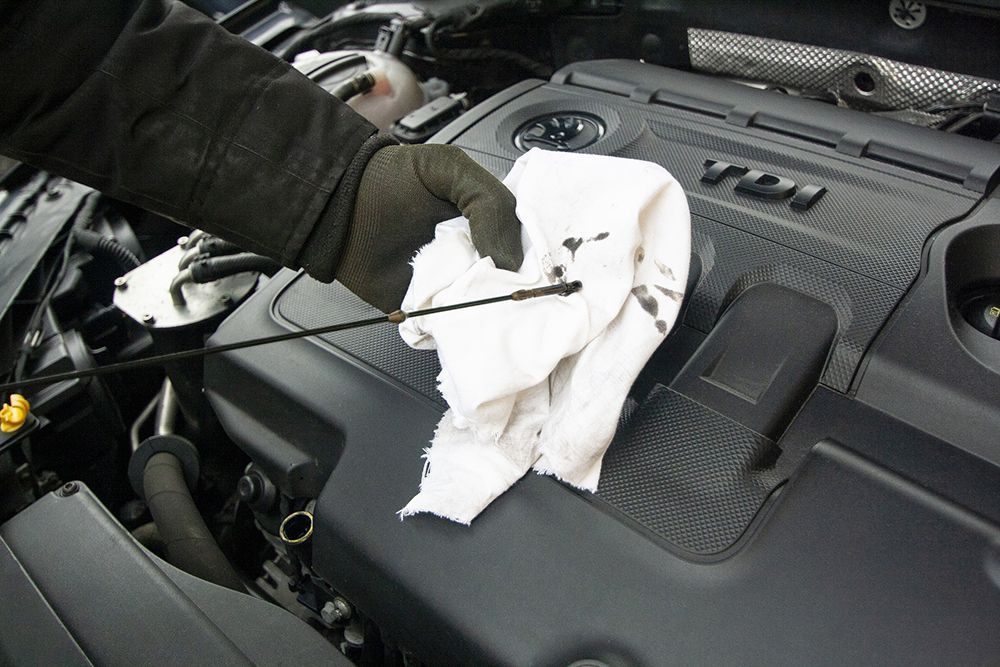
What Happens to Engine Oil in Cold Weather
Engine oil is designed to flow freely through tight passages, coat metal surfaces, and reduce friction between moving parts. That flow depends on the oil’s viscosity, which is a measurement of how thick or thin the oil is at a given temperature.
When temperatures drop below freezing, conventional and lower-grade oils thicken significantly. Thicker oil moves slower through the engine at startup, and during those first 30 to 90 seconds after you turn the key on a cold morning, your engine is running with reduced lubrication. Metal pistons, bearings, camshafts, and cylinder walls are making contact with less protection than they need.
This is not a hypothetical problem.
According to the Society of Automotive Engineers, a significant portion of total engine wear occurs during cold starts, precisely because oil has not yet reached full operating temperature and flow rate. In Michigan, where winter temperatures routinely sit in the single digits and can dip well below zero, cold-start wear is a real and recurring stress on your engine.
The effect compounds over time. An engine that endures 100 or more cold starts per Michigan winter, with sluggish oil each time, accumulates wear that shortens the engine’s overall lifespan. The right oil choice and a consistent oil change schedule reduce that wear substantially.
How Oil Viscosity Ratings Work
Every bottle of motor oil carries a viscosity rating, and understanding that rating helps you make sense of which oil protects best in cold weather.
A rating like 5W-30 contains two numbers. The first number followed by the “W” (which stands for winter) tells you how the oil flows at cold temperatures. The lower that number, the thinner the oil stays when it is cold, and the faster it reaches engine components at startup. The second number tells you how the oil performs at normal operating temperature (around 212 degrees Fahrenheit).
Here is how common viscosity ratings compare in cold weather:
| Viscosity Rating | Cold Flow Performance | Best Use Case |
|---|---|---|
| 0W-20 | Excellent cold flow, thinnest at startup | Modern engines designed for low-viscosity oil, ideal for Michigan winters |
| 5W-20 | Very good cold flow | Many newer vehicles, solid winter performer |
| 5W-30 | Good cold flow, versatile | Wide range of vehicles, year-round protection |
| 10W-30 | Moderate cold flow | Older engines, less suited for extreme cold |
| 10W-40 | Slower cold flow | High-mileage engines in mild climates, not ideal for Michigan winter starts |
The key takeaway for Michigan drivers: the lower the winter number, the faster your oil flows when your engine needs it most. A 0W-20 or 5W-30 full synthetic oil will flow significantly better at zero degrees than a 10W-30 conventional oil.
Your vehicle manufacturer specifies a viscosity grade in the owner’s manual. That specification is engineered for the operating conditions your engine was designed to handle. Our technicians at Complete Auto Maintenance Centers can verify which grade your vehicle requires and recommend the right oil for Michigan’s winter conditions.
Why Synthetic Oil Performs Better in Cold Weather
Not all oils with the same viscosity rating perform equally in cold weather. The base oil, whether conventional or synthetic, makes a measurable difference.
Conventional oil is refined from crude petroleum. Its molecular structure is irregular, which means it thickens more dramatically as temperatures drop and breaks down faster under heat. Synthetic oil is engineered in a laboratory with a uniform molecular structure. That consistency gives synthetic oil three advantages in cold weather:
-
Faster cold flow
Full synthetic oil maintains its fluidity at lower temperatures than conventional oil with the same viscosity rating. A 5W-30 synthetic flows faster at startup on a 10-degree morning than a 5W-30 conventional.
-
Better startup protection
Because synthetic oil reaches engine surfaces faster after a cold start, it reduces the window of time when metal components are running with minimal lubrication. Less cold-start wear means longer engine life.
-
Longer service intervals
Synthetic oil resists thermal breakdown better than conventional oil, which means it maintains its protective properties longer. Many vehicles running full synthetic oil can go 7,500 to 10,000 miles between oil changes, compared to 3,000 to 5,000 miles for synthetic blend.
For Michigan drivers, synthetic oil in cold weather is not a luxury upgrade. It is a practical choice that directly protects your engine during the months when cold-start stress is highest. Complete Auto Maintenance Centers carries Mobil 1, Royal Purple, and CAM2 oils in full synthetic formulations matched to manufacturer specifications.
When to Get a Winter Oil Change
Timing your oil change before cold weather arrives gives your engine the best protection during the months when it needs it most. Fresh oil flows better than oil that has been in service for thousands of miles and accumulated contaminants, moisture, and thermal breakdown products.
If your next oil change falls anywhere between October and December, schedule it before the first hard freeze rather than after. Starting winter with fresh oil and a new oil filter means your engine gets clean, properly viscous lubrication from the first cold morning.
Complete Auto Maintenance Centers recommends these winter oil change intervals based on oil type:
| Oil Type | Recommended Winter Interval | Why |
|---|---|---|
| Synthetic blend | Every 3,000 to 5,000 miles | Shorter-life formulation degrades faster in cold-hot cycling |
| High mileage synthetic blend | Every 3,000 to 5,000 miles | Seal conditioners and higher-mileage additives work best when fresh |
| Full synthetic | Every 7,500 to 10,000 miles | Superior cold-flow properties and thermal stability last longer |
Every oil change at Complete Auto Maintenance Centers includes an oil filter replacement and a complimentary 13-point inspection that covers fluid levels, belts, hoses, tire condition, battery connections, lights, and other critical components. Our technicians check the systems that matter most heading into winter so you can address potential issues before they strand you on a cold morning.
5 Signs Your Engine Oil Is Not Protecting You This Winter
Between scheduled oil changes, watch for these indicators that your oil may not be performing as it should:
-
Slow or labored engine cranking on cold mornings
If your engine turns over sluggishly when the temperature drops, thickened oil may be part of the problem. While a weak battery can cause similar symptoms, degraded oil increases resistance on internal components and makes cold starts harder.
-
Louder than normal engine noise at startup
When oil is too thick to reach surfaces quickly, you may hear increased ticking, tapping, or valve train noise for the first minute or two after starting. This sound is metal-on-metal contact happening with insufficient lubrication.
-
Dark, gritty oil on the dipstick
Fresh oil is amber and translucent. Oil that has turned dark brown or black and feels gritty between your fingers has accumulated contaminants and lost its protective properties. In winter, degraded oil thickens even more than fresh oil at the same temperature.
-
Oil change reminder light or mileage overdue
If your dashboard maintenance indicator is on or you have passed your recommended interval, do not wait until spring. Winter is the worst time to run on overdue oil because cold temperatures amplify every shortcoming of degraded oil.
-
Visible oil residue or sludge on the oil cap
A milky or thick residue on the underside of your oil filler cap can indicate moisture contamination or early sludge formation. Cold weather driving with short trips, where the engine never fully reaches operating temperature, accelerates this buildup.
If you notice any of these signs, bring your vehicle to Complete Auto Maintenance Centers in Brighton, Dundee, or South Lyon for an oil change and 13-point inspection.